
How to Stop Slugs Coming Into Your House (And Keep Them Out for Good)eading Text Here
Finding slugs in your house is one of those unwelcome surprises nobody wants — especially when it’s a slug trail across your kitchen floor in the morning. Whether you’re dealing with a slug in the kitchen, a slug in the bathroom, or you keep finding slugs in your home night after night, the good news is that once you understand why they’re coming in, keeping them out becomes a whole lot easier. If you’re wondering what attracts slugs inside the house or why they keep coming into your house, read on.
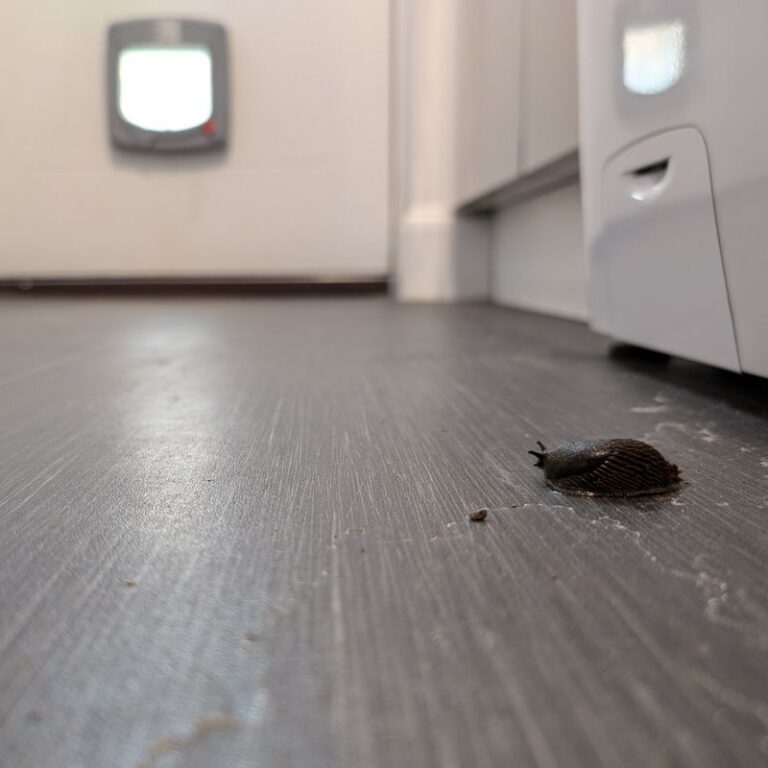
How do slugs get inside in the first place?
Slugs are far more flexible than they look. Their boneless bodies allow them to compress and squeeze through gaps you’d never think twice about — a hairline crack under a door, a slight gap where a pipe enters the wall, or a poorly sealed airbrick. If there’s a route, they’ll find it.
What draws them in is largely moisture and warmth. Slugs are cold-blooded and need to stay damp to survive, so they’re drawn instinctively towards areas of warmth and humidity — exactly what the inside of your home offers on a cold, wet night.
Rule out damp problems first
Before anything else, you need to play detective. If slugs keep appearing inside your house in a particular room — say, near your washing machine, under the kitchen sink, or along a back wall — there’s a good chance there’s a damp source nearby attracting them.
- Slow leaks: A washing machine hose that weeps slightly behind the unit can create a persistently damp patch on the floor or wall — invisible to you, but a beacon to slugs. Check behind appliances and feel for soft flooring or discolouration.
- Gutters and downpipes: Blocked or broken gutters can cause water to run down external walls and pool near the base of the house, softening brickwork and creating damp entry zones.
- Failed damp proof course: An older property with a deteriorating DPC can allow ground moisture to wick up through walls, creating the damp internal environment slugs love.
- Penetrating damp: Cracked render, poorly pointed brickwork, or leaking window frames can all let rain in and keep walls persistently damp.
Getting these issues addressed isn’t just good slug prevention — it protects your home structurally. Once you’ve ruled out or resolved the damp sources, you’ve already made the environment significantly less hospitable.
Quick check
Look for slug trails in the morning — they leave a tell-tale silvery mucus track that shows exactly where they’ve been travelling. Follow it back towards the wall and you may be able to pinpoint the entry crack or gap directly.
What attracts slugs into your home
Damp aside, slugs are opportunists. A cluttered utility room, piles of cardboard, or a corner that rarely gets swept are all places they’ll happily shelter during the day. Keeping the area tidy and well-aired removes their preferred hiding spots.
Pay particular attention to pet food. A bowl of cat or dog food left out overnight is essentially a free slug buffet. It’s one of the most common overlooked attractants — pick up food bowls before dark and clean up any spillages around them. Slugs will follow a food scent surprisingly far.
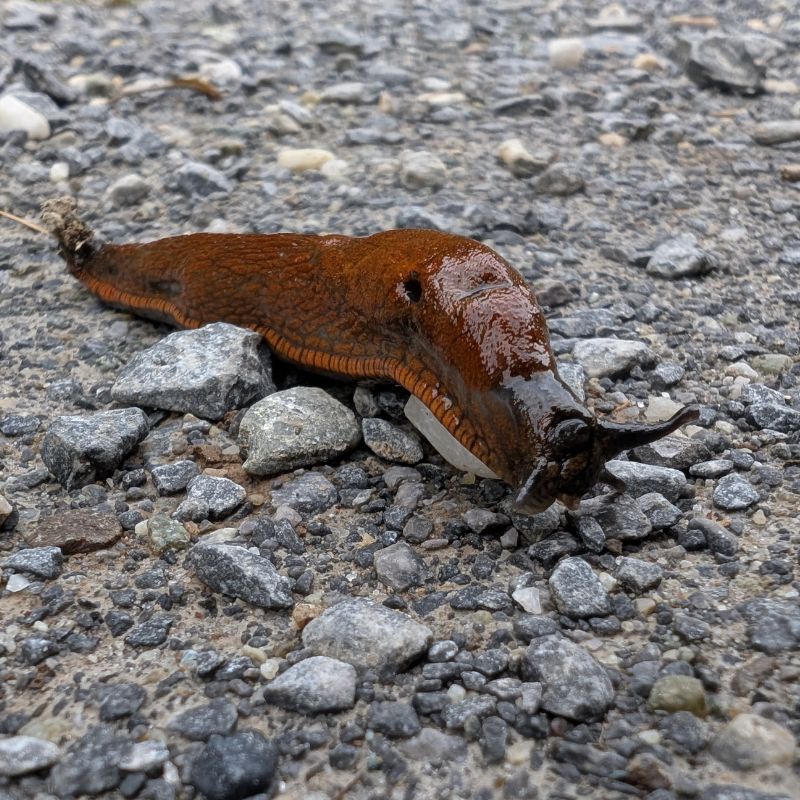
Catching them in the act — a tip worth trying
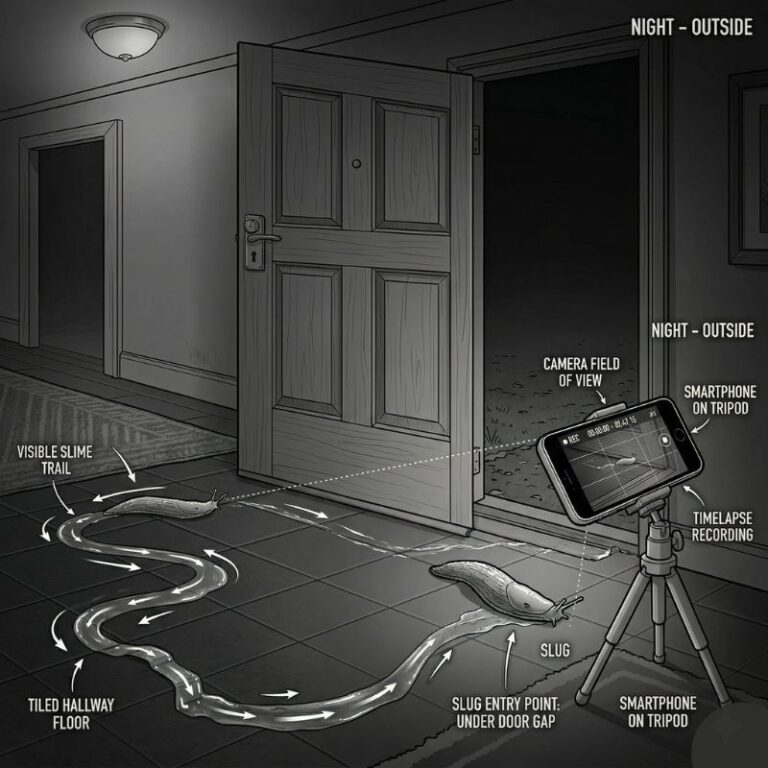
If you’re still not sure where slugs are getting into your house, try setting up a time-lapse on your phone — pretty much all smartphones have a setting for this. Leave a low light on, position the camera to cover the area where you’re finding them, and let it run overnight. The footage can reveal not just the entry point, but also whether they’re heading straight for the pet bowl, a piece of dropped food, or a damp spot behind the fridge.
Alternatively, simply set an alarm for around 2–3am and check with a torch. Slugs are most active in the small hours, and catching them mid-trail can tell you a great deal about where they’re coming from and going to.
Spotted a slug trail but not the slug itself? Follow it — the entry point is usually where the trail begins.
Seal up the gaps with adhesive wool tape
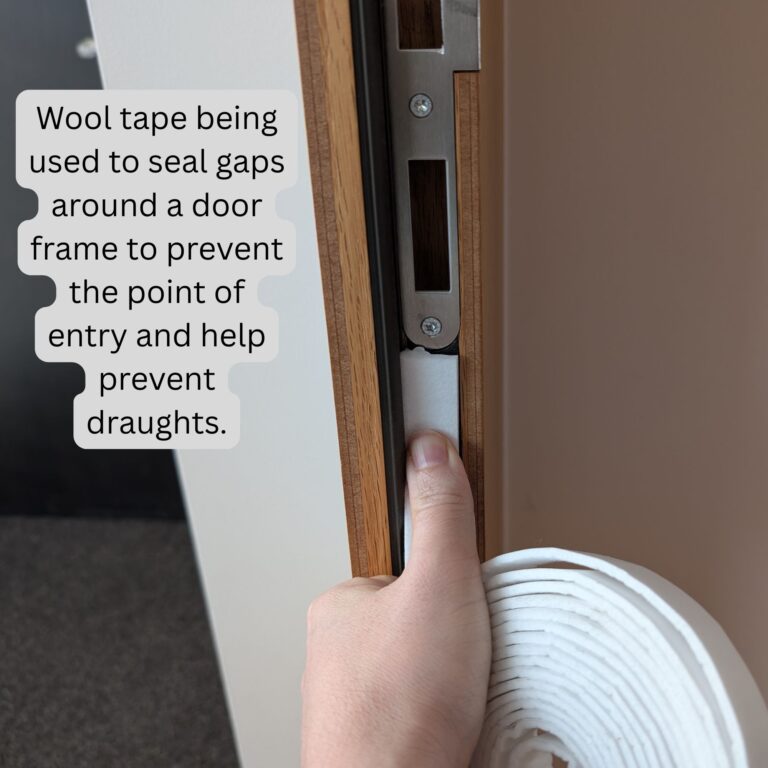
Once you’ve addressed the underlying causes and established where they’re gaining entry, the next step is putting a physical deterrent in place. Wool slug tape Can be used around door frames, window frames and in tight gaps. Wool is a natural slug repellent — the fibres are uncomfortable and irritating for them to cross, and slugs will reliably avoid it and it’s often used by gardeners to stop slugs from climbing up pots and planters. Or if it’s around pipework you can buy some wool insulation and plug any gaps with this.
Adhesive Wool Tape
Our adhesive wool tape is designed specifically to seal the gaps and edges where slugs enter — along door thresholds, window frames, across window sills, or wherever you’ve identified their route in. It’s easy to apply, discreet, and works with the slug’s own instincts against it. No chemicals, no mess — just a natural barrier that keeps them from wanting to cross.
And because it seals gaps so effectively, it also helps keep out draughts — so you’re not just blocking slugs, you’re improving your home’s insulation at the same time. Every gap that’s closed is a little less heat escaping and a little less on your energy bills.
Catching any that get through
Even with the best prevention in place, the occasional determined visitor may still find a way in — especially during very wet periods. That’s where a slug trap earns its keep.

Slug trap
Our slug trap can be baited and left in the areas where you’re finding them. Slugs are drawn in by the bait and caught without the need for pellets or poisons — safe for pets, children, and wildlife. Place it along the edge of a room, near the entry point you’ve identified, and check it each morning. It’s a clean and effective way to monitor and control any remaining activity.
Putting it all together
The most effective approach combines all of these steps: find and fix the damp source, clean up food and clutter, use the time-lapse trick to identify the exact entry point, seal it with wool tape, and deploy a trap to catch any stragglers. Work through these systematically and you’ll almost certainly solve the problem for good — without any harmful chemicals in your home.
Slugs are persistent but predictable. Remove what draws them in, block the route they use, and catch any that still try — and your floors will be trail-free before long.
Slugs are persistent but predictable. Remove what draws them in, block the route they use, and catch any that still try — and your floors will be trail-free before long.